Tuesday, May 28, 2013

A week for the birds (and some nice videos)

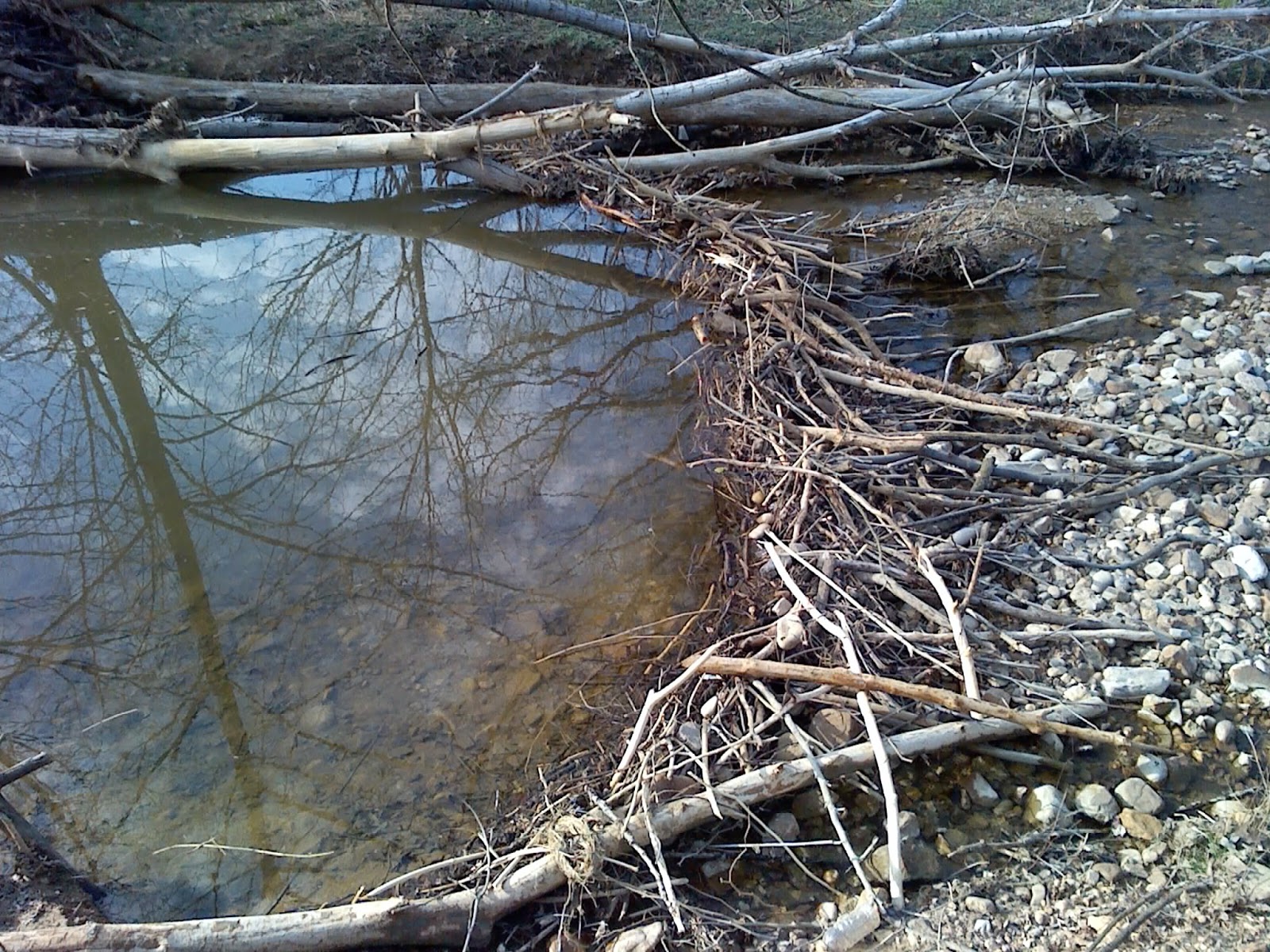
the dam. 27 May 2013.
The college year is finished, so I was delighted to have my son join me as we checked the camera yesterday. The dam is about the same as it was last week.


Last week I placed the camera in a new location, only inches above the water line. My hope was to get a better view of what I believe is the beavers' home--maybe even to get a picture of a beaver going into or out of that home. No luck there.


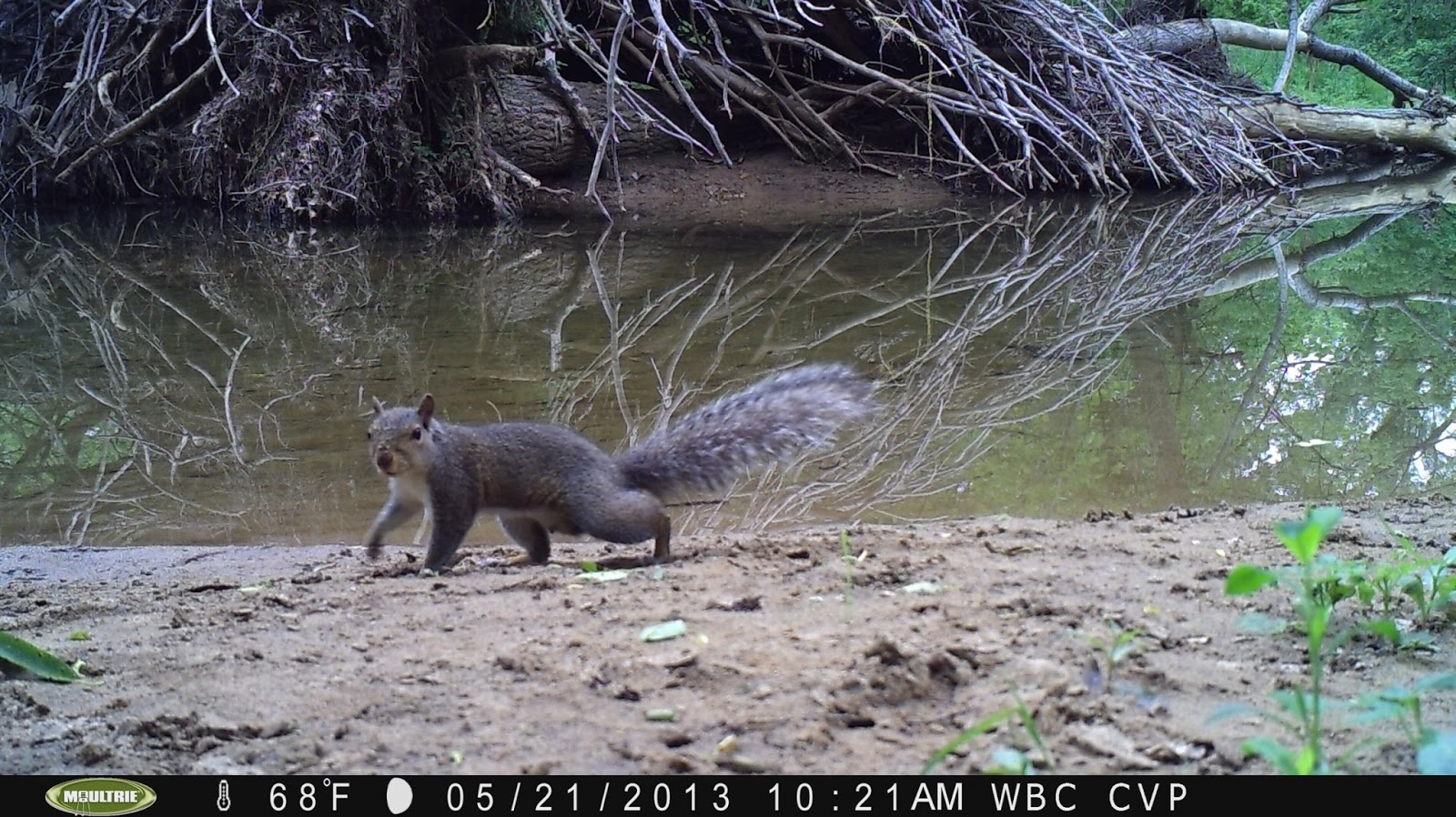
But I did capture several birds, and a couple other mammals. That was a surprise;and a lot of fun.

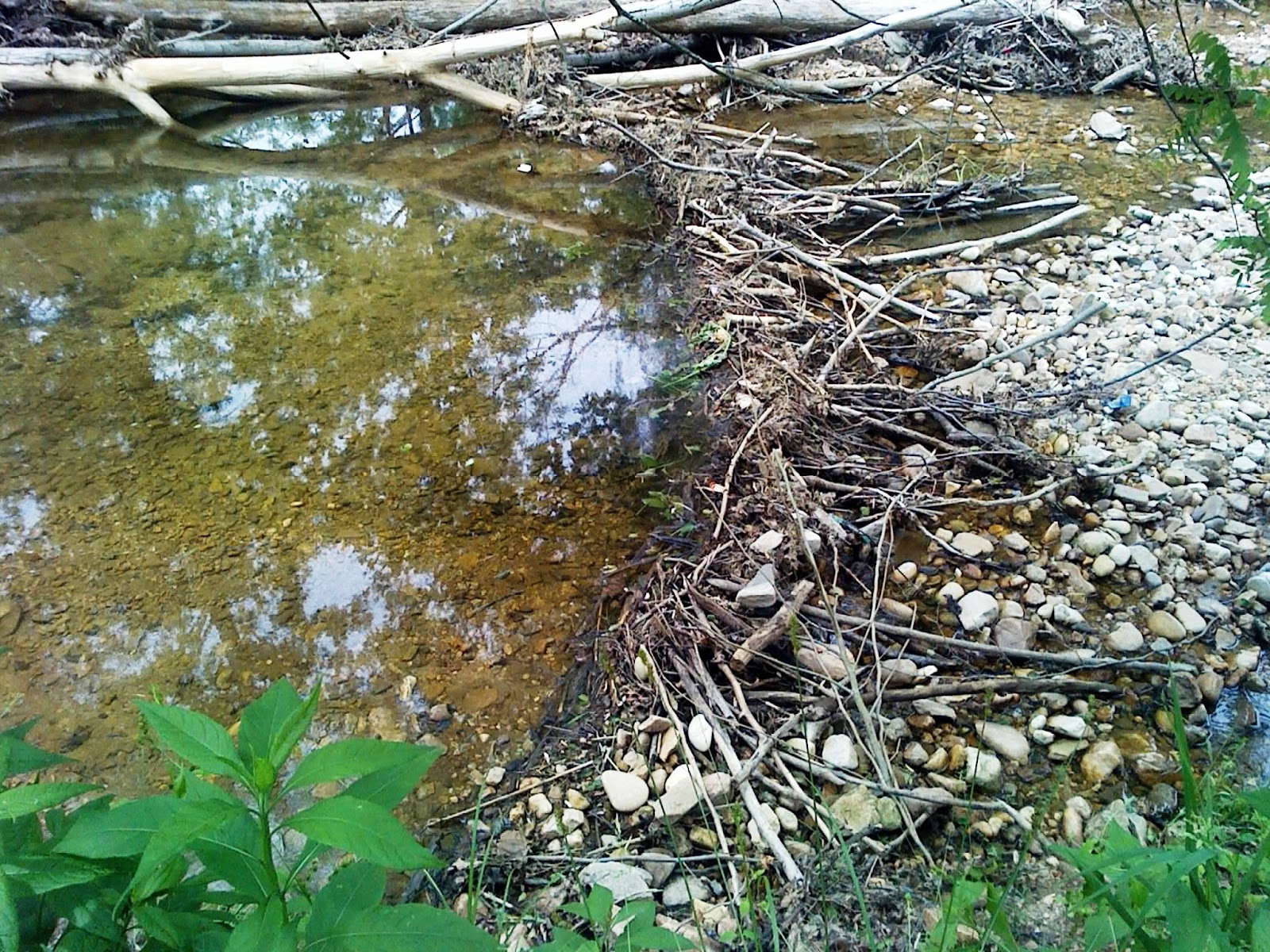
the man-made dam. 27 May 2013.
 I also discovered that someone has built a dam of stones at the upstream end of the beavers' pond. That's the second art installation I have found in the past couple months.


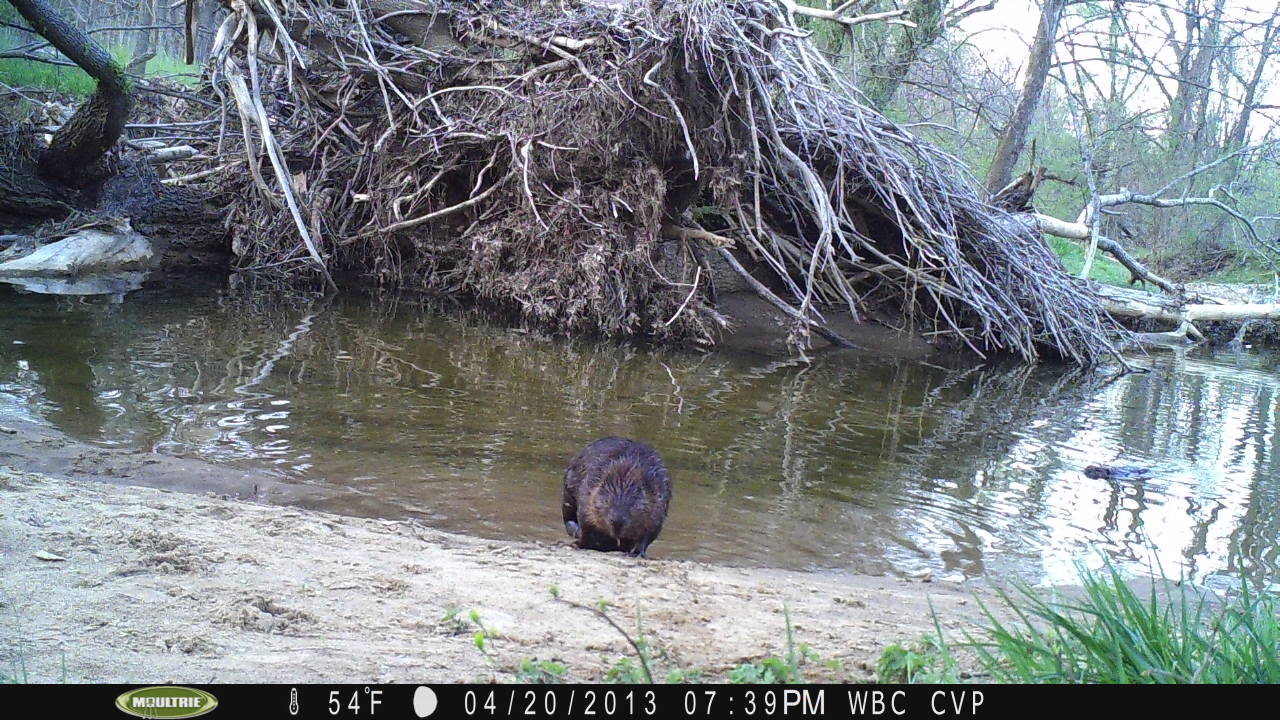
Enjoy the birds, and video proof that our rodents are still there....


More later.


Sunday, May 19, 2013

Beavers pair for life...

the dam. 19 May 2013.
I checked the dam today, and all is well. I have no evidence that the kits have been born yet. Of course, you can't prove a negative, can you? So it is possible that they have been.

Beavers are one of the few animals that pair for life. I found a nice description of their family life:

"Beaver usually live in family units consisting of the older mated pairs, young from the previous year, and young from the current season called kits. Breeding season takes place in late January or February in most states. Young from the previous year are about 22 months of age at this time and they are evicted from the colony to relocate and seek mates of their own. The gestation period of beaver is 107 days and the adult male and kits usually take up a temporary residence in a bank den while the new litter is being born in April, May or June. The birthing process may take several days, and 3 to 5 kits are a typical litter size. Beaver kits are fully furred when born, their eyes are open, and the incisor teeth are visable. Newborn beaver kits take to the water easily, and they might be swimming before they are one day old. Most adult beaver are monogamous, and stay with their mate throughout life." (http://www.nationaltrappers.com/beaver.html)

So we still wait for news. And wait.


While we wait, I got a nice daylight video of one of the beaver swimming. I enjoyed this for two reasons. 1--It's a great video. 2--the camera was tripped by a nice man mugging for the camera. At 7:48 pm on the 16th a nice man wearing a blue t-shirt with some stick figures running on it mugged for the camera. (I will not post the picture as I will not post any pictures of people.) While mugging, he tripped the camera, then walked away. By an amazing coincidence, the beaver decided to go for a swim while he walked away...

The rest is history.


I also got a couple nice pictures. One of  one of our beavers, another of a Great blue heron. Enjoy them.


More later.

Tuesday, May 14, 2013

Breaking News! (or should I type Falling News!)

the dam. 14 May 2013.
I went after work today to check on the camera and the beaver dam.


14 May 2013.
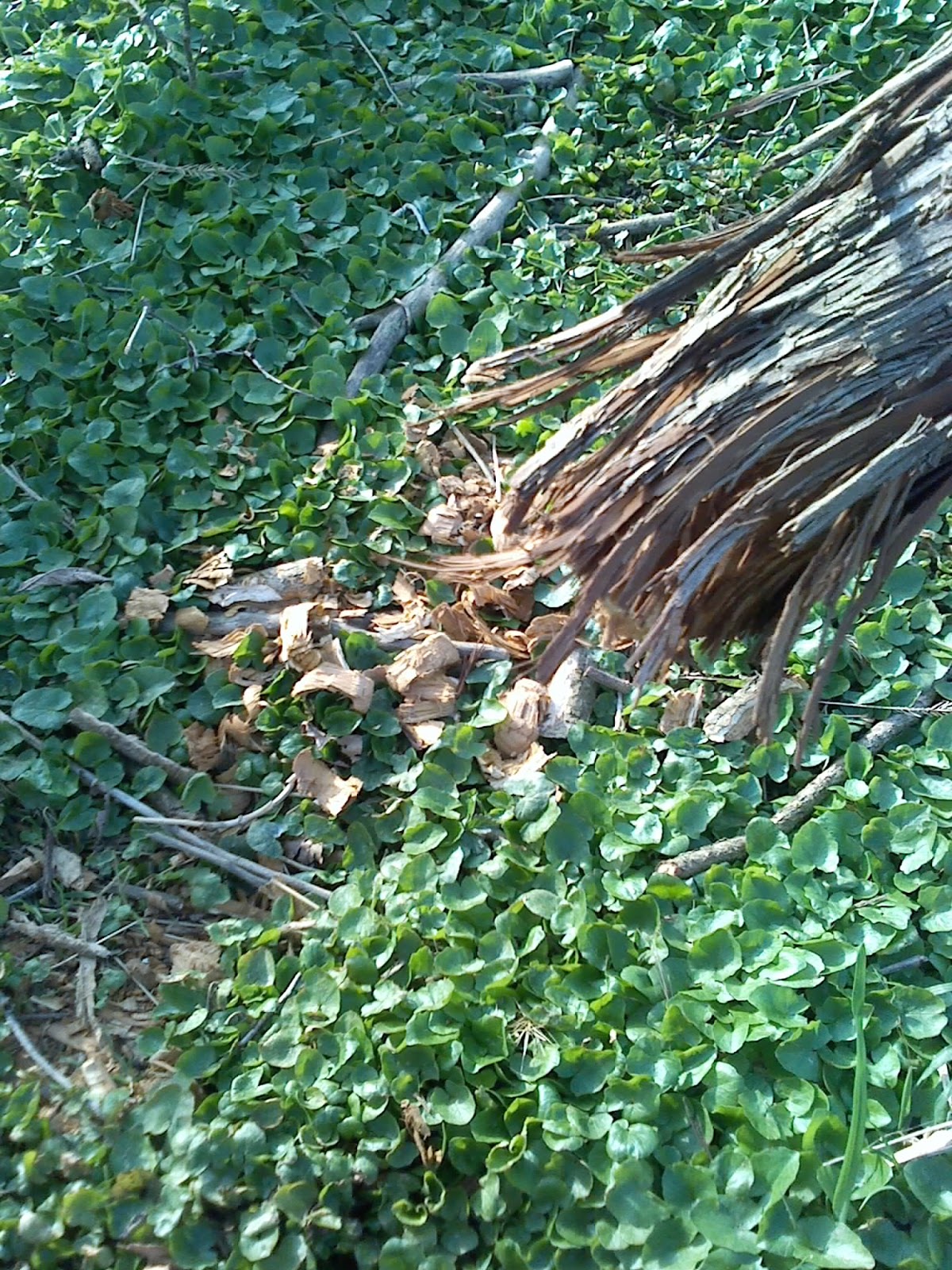
Finally, that big tree that the beaver(s) have been working on has fallen over. I have placed the camera overlooking the pond itself, and not the tree. So, sad to say, I have no film of the great event. Anyway, the tree is finally down and the camera still works, and spring is still beautiful.


Don't miss Oriole Day at Cromwell Valley Park. http://www.cromwellvalleypark.org/OrioleDaySingleFlier2013.pdf


More Later.

Sunday, May 12, 2013

Are we going to have baby beavers soon?

I visited the beaver pond yesterday. I was struck by the appearance of the dam--it almost appears to have been abandoned. A portion of it is gone and the rest looks somewhat bedraggled. 
the dam. 8 May 2013 at 17:53.
A look at the two photographs and the chart below may help to explain that. We had some rain in the past week, and both of my visits were soon after that rain. Look at that water flow chart. A little bit of rain falls and, whammo, the water level rises in a straight line. That kind of fast and furious urban water flow is damaging to the beaver dam. 


USGS stream flow data.
Meanwhile, I observed a couple other things. One is that our rodent friends are not cutting down trees. Three explanations occur to me to explain this. One is that the beavers just aren't worried much about the dam this time of year--that they will devote more time to it as fall approaches. Another is that the beavers' diet has switched to grassy plants, rather than wood cambium. A third possible explanation is that the beavers are getting ready for birthing. (Boy, I can't believe I just typed that. It feels like anthropomorphism to me. Maybe I'll re-write this paragraph later.)


the dam. 11 May 2013 at 20:08
Anyway, trees are not being cut down. The beavers are still there. And other animals are stopping by.


Enjoy the pictures.


More later.

Sunday, April 28, 2013

Now how do I write the gender pronouns? (I need an editor)

I checked the dam again yesterday.

the dam. 27 April 2013.
As you can see, all is well.


And we have photo confirmation of our quick visual observation of last week. As you can see, there are indeed two of these delightful rodents in our pond.

count 'em--there's two!

I presume that this means there will soon be more. Beavers are monogamous. They usually give birth to 2 to 4 young each spring. Birthing occurs typically in April or May. That's something to look forward to, isn't it?

I have noticed something else that caught my attention in the last couple visits to the beaver pond. There are fewer sticks left over from the beaver eating the cambium than there were in the winter. I think this means that they have switched to eating more green plants and less wood cambium. 


27 April 2013.
Also, the big tree is nowhere near being eaten through. I'll let you know if they ever do get it down.


Below are some pictures of the comings and goings at the pond recently.


More later.


Sunday, April 14, 2013

Live action--what fun. And video to boot.

the dam and its creator. 13 April 2014.
Last night my splendid wife and I decided to take a quick walk through the park, and to look at the camera. I was especially anxious to see how much damage was done to the pond by the recent rains.
As we approached the beaver pond, we both noticed water rippling.

Boy howdy, did we time it right.

The beaver was out and active. (Can you see it it the picture above placing a stick on the dam?) Too cool.

We spent several minutes watching. My wife actually saw 2 beavers. She saw the second only briefly, near the dam. The one that stayed in view placed two sticks on the dam, and some mud and leaves. We also saw it leave the pond and spend a couple minutes near the large tree that it still hasn't finished eating through. It appeared to be eating grass.


So, I leave you with 2 videos of the beaver in it's pond.


More later.


Tuesday, April 9, 2013

A dozen good things beaver ponds do for the environment


the dam. 9 April 2013.

I checked the beaver today, and discovered that the tree is still standing.


 I decided to keep the camera looking at the tree, as I think it might be fun to capture its fall on camera.
(Wish me luck with that, please.)

As you can see, the beaver is still working on the tree.


While poking around the area, I noticed some other interesting things. From an earlier entry, you may recall that the beaver cut down a tree, but that the tree got hung up in vines and didn't fall to the ground. Today, I noticed that our rodent friend has cut through the vine, allowing the tree to drop to the ground.
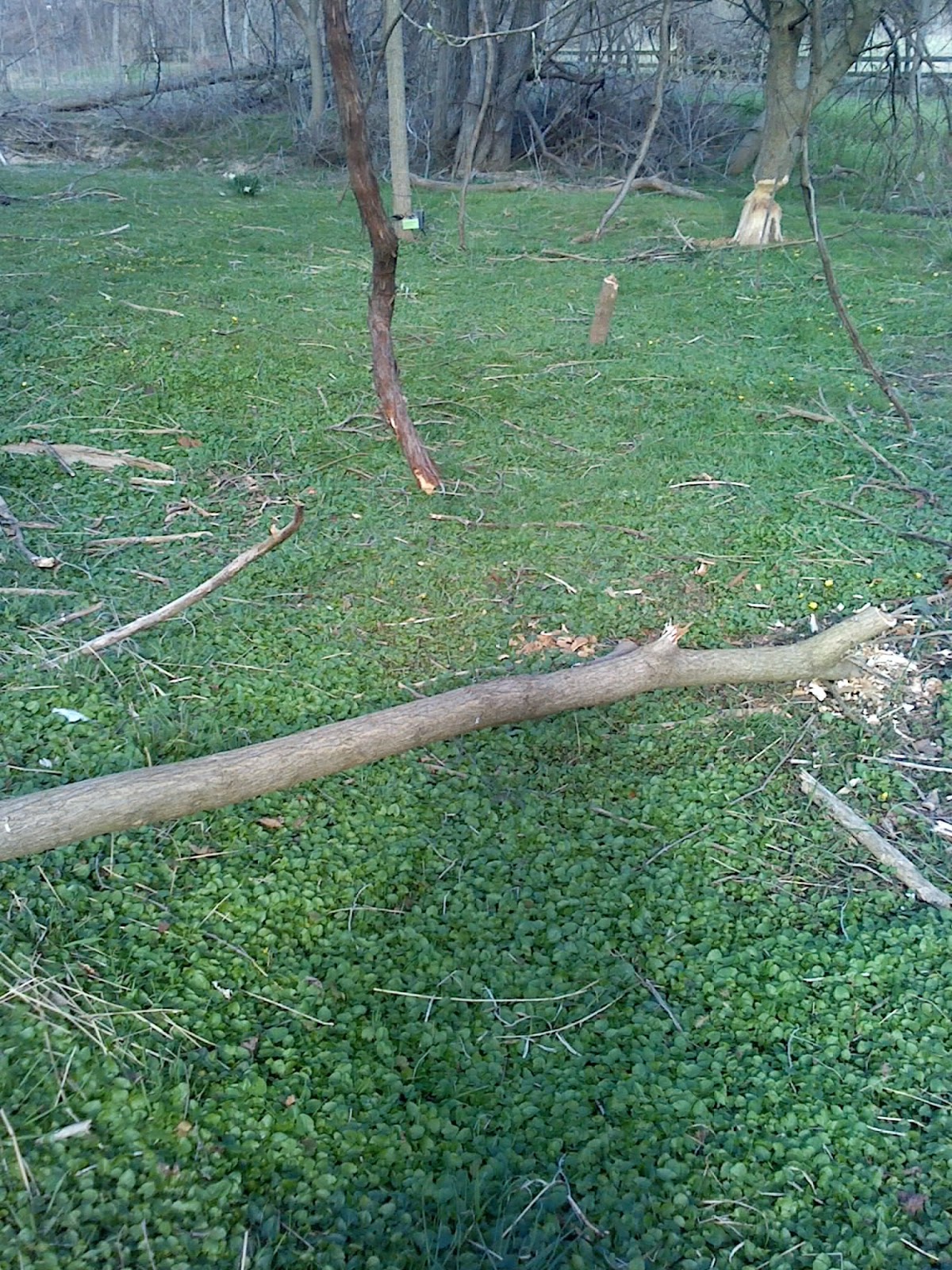
the tree, on the ground and limbed by the  beaver.

The vine the beaver cut to free the tree.


How's that for problem solving?


I also noticed an art installation in Minebank Run. It is unsigned.


Courtesy of North Carolina State University, I leave you with a list of Beaver Pond Benefits

Active Ponds

  1. Improve downstream water quality
  2. Provide watering holes for agricultural and wildlife needs
  3. Supply important breeding areas for amphibians and fish
  4. Provide diverse wetland habitats
  5. Furnish feeding, brood rearing and resting areas for waterfowl
  6. Encourage many reptile, bat amphibian, fish and bird species


Abandoned Ponds

  1. Furnish snags for cavity-nesters and insectivores
  2. Fallen logs supply cover for reptiles and amphibians
  3. Provide essential edges and forest openings
  4. Supply diverse moist-soil habitats within bottomland forests
  5. Create productive bottomland forests
  6. Provide foraging and nesting areas for bats, songbirds, owls, and hawks

http://www.ces.ncsu.edu/forestry/pdf/www/www23.pdf


More later.